

Your stomach growls a war cry as you scan the street for sustenance. Suddenly, an aroma assaults your senses – a beguiling mix of spice and warmth that promises an adventure for your taste buds. You spot a hidden gem – an Ethiopian restaurant. Intrigued, you push open the door.
A wave of exotic heat washes over you, mingled with the intoxicating scent of something entirely new. Fragrant stews simmer in clay pots, their rich, fiery colours a feast for the eyes. Platters piled high with spongy flatbread beckon, and you can’t help but imagine yourself tearing off a piece to scoop up those enticing morsels. This isn’t your ordinary dinner; it’s a culinary expedition waiting to be devoured. Is your palate ready for a flavor explosion unlike anything it’s ever known? Then step inside, friend, and prepare to be amazed by the magic of Ethiopian cuisine.
You might think this explosion of flavor is a secret reserved for the streets of Addis Ababa, but my friend, the magic of Ethiopian food has spread its wings far and wide. Believe it or not, there’s a whole world of Ethiopian restaurants out there, just waiting to be explored. From the bustling streets of New York to the charming cafes of Paris, these hidden gems offer a taste of Ethiopian culture, one flavorful bite at a time. As a self-proclaimed Ethiopian food fanatic (some might even say connoisseur!), I’ve embarked on a delicious quest to discover the best these international havens have to offer. So, come along, fellow adventurer, and let’s embark on a journey through the vibrant world of Ethiopian cuisine, one spicy stew and spongy injera at a time!
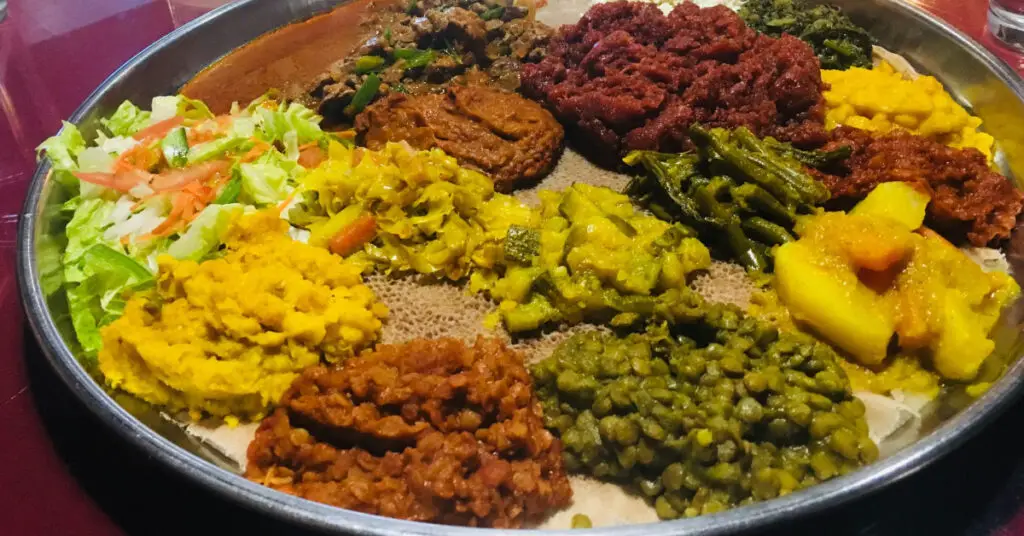
Forget your typical fork and knife – Ethiopian cuisine is a hands-on affair! Here, the spongy, fermented flatbread called injera takes center stage. It’s both your plate and your utensil, used to scoop up an array of stews known as wats. These wats come in a dazzling symphony of flavors, ranging from fiery berbere-spiced lamb to earthy lentil stews simmered with fragrant herbs. Vegetables take center stage too, often seasoned with a touch of heat and vibrant with color. Don’t be surprised if you find yourself sharing a platter with your fellow diners, tearing off pieces of injera and diving into a communal feast. It’s a celebration of flavor, friendship, and a unique way of experiencing food that’s sure to leave you wanting more. So, are you ready to ditch the ordinary and embrace the extraordinary? Let’s delve into the rich tapestry of Ethiopian cuisine!
The Growing Popularity Of Ethiopian Restaurants Globally

Ever wonder why there are so many Ethiopian Restaurants in any major city around the world? Ethiopian food has been gaining more and more popularity in recent years. Ethiopian cuisine is an incredibly diverse and flavorful experience that has been around for centuries. With its unique mix of spices and ingredients, it is no surprise that Ethiopian restaurants have been popping up around the world.
Ethiopian food offers a unique blend of flavors that incorporate the spices, herbs, and vegetables of the region with influences from Middle Eastern, Indian, and Mediterranean cultures.
Ethiopian cuisine is renowned for its unique and intricate flavors. From lentils and vegetables to spicy stews and Injera, the country offers an array of delicacies sure to tantalize your taste buds.
For those looking to sample authentic Ethiopian food, there are a number of Ethiopian restaurants located all over the world that specialize in this type of cuisine. Whether you’re looking for popular traditional dishes like Doro Wot and Kitfo, or whether you are looking for vegetarian options like Misir Kik Wot or Tikil Gomen, or maybe you’re just looking for a casual lunch or an intimate dinner – Ethiopian restaurants can offer something for everyone.
The Ethiopian Food is dedicated to promoting the best Ethiopian Restaurants from around the world, in any city or town – so that anyone interested to try Ethiopian food for the first time, or anyone thinking about including Ethiopian food in their day-to-day meal plans has plenty of choices to get exactly what you are looking for.
The Ethiopian Dining Experience

Dining at an Ethiopian restaurant is a unique experience that differs from typical Western dining. The first thing you will notice is the absence of utensils. Instead, Ethiopian cuisine is traditionally eaten with your hands. The centerpiece of the meal is injera, a sourdough flatbread that is used as a utensil and also serves as the plate. Diners tear off pieces of injera and use them to scoop up bites of the various stews, vegetables, and meats that are served on top of it. Injera is also used to soak up any remaining sauce at the end of the meal.
Ethiopian dining is also a communal experience. Most dishes are served family-style, and everyone at the table eats from the same plate. This fosters a sense of community and togetherness around the meal. It’s a great way to bond with friends and family, and it’s also a great way to meet new people.
If you’re a first-time diner at an Ethiopian restaurant, don’t be intimidated. The servers are usually very friendly and are happy to guide you through the menu. Start with a sampler platter, which will give you a taste of the various dishes and stews. Ethiopian cuisine is known for its spice blends, so be prepared for some heat. If you’re not a fan of spice, be sure to let your server know. They can help you choose milder dishes.
Finding an Ethiopian Restaurant Near You
The secret’s out! Ethiopian food isn’t some hidden gem anymore. These vibrant restaurants are popping up all over the globe, catering to adventurous eaters and becoming trendy hotspots. Foodies are ditching the usual and flocking to experience the explosion of flavors and the unique communal dining experience.
Finding one is easier than ever these days – a quick search on Yelp or Google Maps can unlock a world of flavor right in your own neighborhood. Craving a taste of Ethiopia from the comfort of your couch? Platforms like DoorDash and similar delivery services might even bring that delicious injera and fiery stews straight to your door! Ethiopian restaurants are the new “in” place to be, offering an escape from the ordinary and a chance to savor a taste of another culture. So, are you ready to join the movement? Step inside, grab some injera, and prepare to be wowed by the magic of Ethiopian cuisine!
Ethiopian Cuisine Beyond Restaurants
If you’re unable to visit an Ethiopian restaurant or if you’re interested in trying your hand at cooking Ethiopian cuisine at home, there are a few things to keep in mind. First, it’s important to source authentic ingredients. Many Ethiopian dishes rely on unique spices and herbs that may be difficult to find at a typical grocery store. Look for an Ethiopian market or specialty store in your area. You can also find many ingredients online.
One great resource for finding Ethiopian recipes and ingredients is online Ethiopian communities and websites. These resources offer a wealth of information on traditional Ethiopian cuisine and cooking techniques.
When it comes to cooking Ethiopian cuisine, it’s important to note that many dishes require a significant amount of time and preparation. For example, the Injera requires fermenting for several days before it can be used in cooking. However, the results are well worth the effort. Some popular Ethiopian dishes to try at home include Doro Wot, a spicy chicken stew, and Kitfo, a raw beef dish seasoned with spices and served with Injera.
Final Thoughts
In conclusion, Ethiopian cuisine and dining culture are truly unique and worth exploring. Dining at an Ethiopian restaurant provides a communal experience that fosters a sense of togetherness around the meal. And if you’re interested in trying your hand at cooking Ethiopian cuisine at home, there are plenty of resources available to help you source ingredients and learn about traditional recipes and cooking techniques.
We encourage readers to try Ethiopian cuisine if they haven’t already. The flavors and experiences are truly unforgettable, and we’re confident you’ll enjoy this rich and flavorful cuisine.